https://youtu.be/y3sRXzGPJjg
Showing posts with label LSD. Show all posts
Showing posts with label LSD. Show all posts
Monday, January 30, 2023

Thursday, November 24, 2022
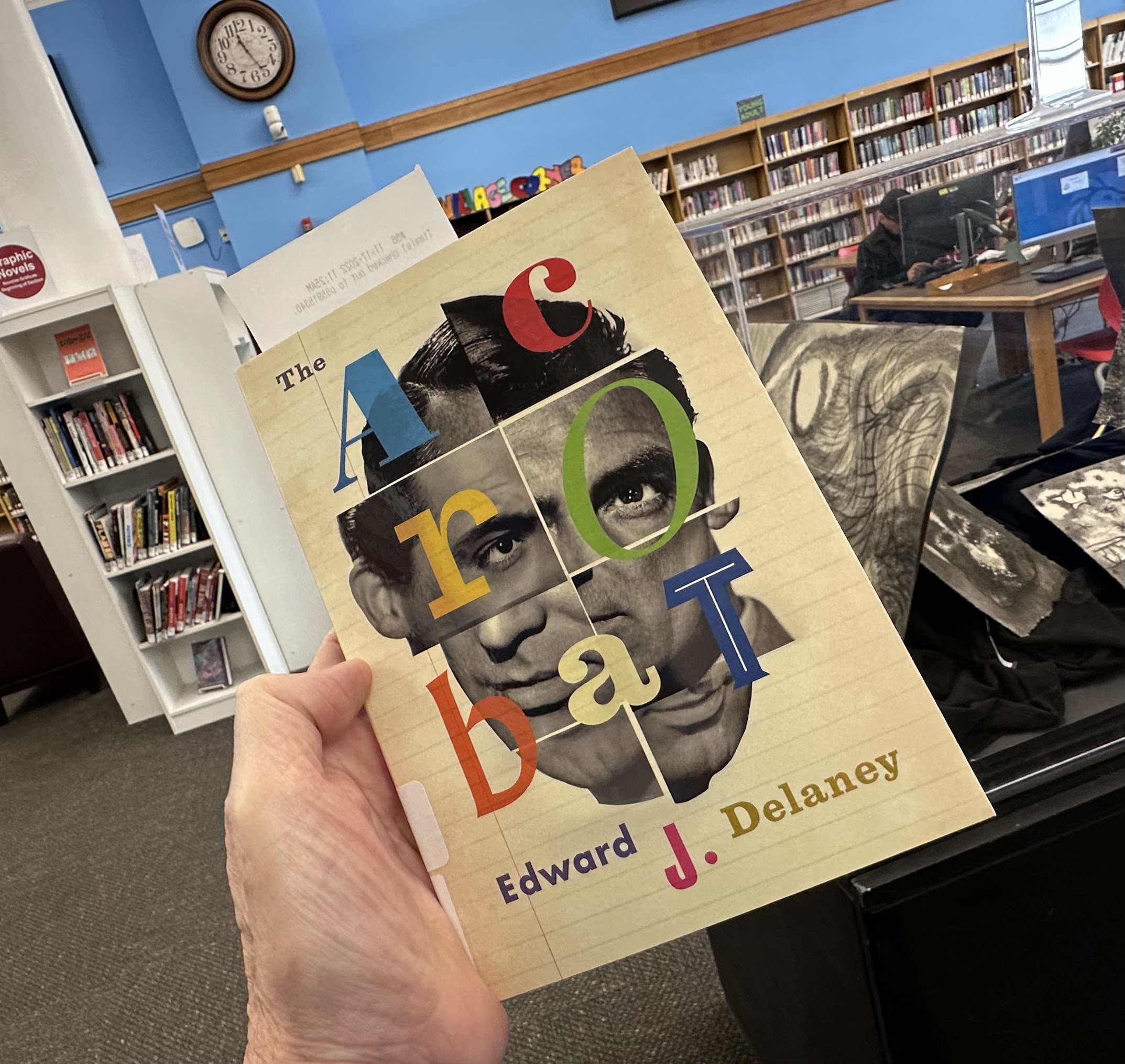
The Acrobat by Edward J. Delaney
The Acrobat by Edward J. Delaney
This is a fictional biography of a fictional person. It includes the contemplations of the real person who transformed into a celebrity and what he makes of the happenstance of this bizarre international movie stardom.
The real person fictionalized here is Archibald Leach, the son of, not even a tailor, but a pressor born and raised in Bristol, England. The fictional person fictionalized is Cary Grant. The novel deftly time travels through the early years of the acrobatic vaudevillian, gently bouncing us to the mind of the 50 to 60 year old star as he looks back at what was that all about while deciding what to do next.
The Acrobat, published in late 2022, is also timely in that it explores the LSD psychological therapy he undertook. There is a 21st Century resurgence into the idea of using psychedelics as a powerful tool for personal growth and renewed understanding of oneself.
The novel fits in with the work of popular best selling author Michael Pollan’s How to Change Your Mind about his late in life explorations of various psychedelics. A follow up book This is Your Mind on Plants expands that study. How to Change Your Mind has been adapted into a four part Netflix documentary series which is bound to reach far more people than the diminishing number of book readers in the moving image age. The series serves as almost a commercial for psychedelics in that it is a far more positive view of this stuff than mainstream commercial entertainment did the first time around when it ping ponged from ridiculous and ineffective propaganda such as Art Linkletter’s unfortunate daughter, this is your mind egg in a frying pan PSA TV ads. All this after an extremely confusing introduction of the substances via hit new music, Are Your Experienced, rock star Beatles, and Leary evangelical promotion.
Another art LSD project played NYC last year. This one oddly enough was a Broadway musical Flying Over Sunset (FLYING OVER SUNSET - Montage). This musical is by James Lapine, a hit show maker with Stephen Sondhiem in the past and played at Lincoln Center. It is about the psychedelic explorations of Aldous Huxley, Clare Boothe Luce, and Cary Grant. (This writer has not seen or read this show's book.)
This reader tries to stay clear of celebrity, movie, rock star biographies. The notion being that after the early wannabe years in which bio info of stars might be practical and instructional, there is little point at gazing up at the kings and queens of our culture. Their lives are so extreme and odd they provide little useful info to the common person. We are all complicated and human, it is really more interesting what the simple complicated folk do to get by than the rags to riches freaks among us.
So why read The Acrobat? This reader was interested in the popularization of LSD, the new interest in it and how it was going to be shown in the novel. It was not new information that Cary Grant was an advocate and participant in LSD therapy. This reader in fact asked the star about this in a Q&A segment of a traveling live show Grant did 38 years ago at Proctor’s Theater in Schenectady, NY in 1984. The question was about LSD and he didn’t back off in the slightest. The battle shaming him over this was almost 25 years in the past. He said it was a significant experience for him. https://www.carygrant.net/articles/schenectady.htm
Cary Grant oddly enough was one of the first high profile personalities to talk publicly about LSD therapy and how he felt it benefitted his life. There was Huxley of course but not a movie star and not the biggest of movie stars at the top of the heap like Cary Grant. In this novel it involves a situation of mentioning it off hand and off the record to a showbiz reporter, but Grant thought this could harm the business of two movies he had in the can: Operation Petticoat and North By Northwest. So he denied ever having spoken to the reporter which couldn’t work out for him since the reporter had recorded an audio tape and also had photos. The reporter sued the star for defamation and they settled in a way that involved a wider distribution of the LSD story. Ultimately it was not a problem and had no effect on his career.
Grant was introduced to the therapy through one of his marriages, to Betsy Drake. They had met on her very first movie Every Girl Should Get Married. So naturally he married his co-star who should get married and did. They were married from 1948 until 1962, his longest marriage and her one. Betsy Drake never remarried and eventually got a Masters of Education from Harvard and became a child therapist while having no children herself. With the two of them hings had gone bad when he had an affair with Sophia Loren while they were making a movie together and wanted to go off with her except she then married Carlo Ponti. So Drake went to Dr Mortimer Hartman as part of dealing with the upset in their marriage and suggested that Cary do as well.
The novel handles the LSD experience quite well. This is done by staying away from dealing with it directly. The chapters tend to begin with an italicized page of two of dream like scenes, These could be interpreted as compilations during the blindfolded LSD sessions, but Delaney doesn’t tell us directly that it is a function of the LSD. This is the safe route. LSD, psychedelic experience is not easily or at all explainable through text and speech, and it’s the type of thing that one cannot assume is like alcohol or some other drug or cannabis. From reading the novel it is impossible to tell if the author himself is experienced and that is just fine. The focus of the novel is the turning point of an aging man in a very odd position in life that he doesn’t entirely understand since his life had become the role of Cary Grant. This gives the novel the appeal of a story that the average reader can get something from. Aren’t we all in masks, playing a type of role that is us but also oddly not? The novel is good in that it focuses on the point of the therapy, not the tools used in exploration or the razmataz special effects that the tool is famous for.
This fine, entertaining, short novel (267 pages) is packed with info on the early years of Archibald Leach through to the early 60s when he is pushing 60 himself and then stops. If the reader is already aware of the biography of this man, they might still get an interesting take on the star from Delaney’s point of view. Others will get an adequate amount of bio information to suffice and a good story about the inner workings of an aging and somewhat alienated man. It also shows how a difficult situation of a boy child and his mother, a confusing separation, can cause the man to perhaps have a hard time staying and trusting a long term relationship with a woman, a marriage or facsimile.
Recommended
The book was a New York Public Library brand new paperback.
Free ride.
Wednesday, June 29, 2022
Squeeze Me by Carl Hiaasen
This is a crime genre novel that is also an entertaining satire of a Donald Trump type in the inexplicable role of president of the USA.
Carl Hiassen, born and raised in South Florida, sets the story in Palm Beach and fills it with ridiculously frivolous older-rich-women, Trump fans. They have named themselves in reference to the “pussy grab” line from tape that was released while he was running the first time.
There is also a mirror image of the Trump Palm Beach place, Mal y Loco, or whatever it is called in real life.
Rich in plot and events, the book is quite up to the minute on trends in the media. There is an LSD microdosing element to the story that goes to a surprising and comic dosing. You have to read it to find out who was dosed. (No, not HIM.)
Squeeze Me refers to pythons, invasive creatures not native to Florida. They are sold as pets and kept until unmanageably large which gets them dumped into the Everglades to thrive or die. In the story, some grow to 25 feet in length.
The cast of characters, along with the Trumpish cartoon, include, local cops, Secret Service agents (not above getting close to their work), a swamp hermit, and a freelance animal control woman, who is one of the main players in the dramcom.
I had a good time with this one.

Monday, May 16, 2022
Yippie Girl by Judy Gumbo
Rolling in late, comes this 1960s movement memoir.
Late because we are deep into the 21st Century now and embedded into someone's World Order in a way that can feel not much more than. . .hopeless.
This memoir could be a joyous read had the movement it is about not been a total failure.
The 1960’s Anti-war and black liberation movements could not build the class solidarity of the temporarily successful labor movement of the early 20th century. That type of massive solidarity was what was necessary to bring change when the power system was vulnerable after the 1929 economic collapse. The 60s movement never had that solidarity or collapse. It was a time of general prosperity, and no matter how nostalgically some of us feel about the youthful exuberance of the “revolution is just around the corner” things are far far worse today than they were in 1970. The movement for economic justice is a failure.
The book is an example of this collapse of common cause solidarity since much of it is really an old comrade saying that she was there and part of it but being a woman was kept on the margins. I have no doubt that this was true and Judy Gumbo has every right to toot her horn and ask for acknowledgement. OK, but now what? And what happened after? She mentions being a very good fundraiser in later life but we hear no more about that. The story kind of ends with the 60s events and the VietNam war. Being a successful fundraiser for Planned Parenthood might be a more heroic story to leave behind than memories of a flashy youthful failure of a movement.
But then I probably wouldn’t have read Fundraiser Woman so the circle is complete I guess and sensation sells.
She comes into the yippie movement directly out of the old movement. She is a Canadian Red Diaper Baby, her father a lifelong career Communiest Party type who built a successful livelihood out of it as a promoter of Soviet Union concert performers in Canada.
This transition from Red Diaper Baby to yippsterville is not really explained. She wasn’t particularly a hippy or acid head, she was a divorcee who dumped her hubby really quickly when she discovered him in bed with another woman. (No hippie Free Love for Gumbo. Later in the story, polyamory was considered and rejected for monogamy.) It seems that she became a Yippee because she became the girlfriend of one of the three main OG yippies, Stew Albert.
From this origin information one could conclude that she went from old school commie daddy to cutting edge for-the-hell-of-it Yippie daddy. But telling it that way kind of derails the neo-feminist train and so it’’s best to not look at it that way. We all have to do what we have to do and times are different than walking a mile in anyone else's one toe loop authentic Indian sandals.
Why does she repeatedly mention the infidelity of her first husband? It seems a sore point even now 60 years, or whatever, later.
I don’t know, for decades it all seemed so recent and immediate, but now just very remote, far away. That movement now seems like an echo of an after shock, of the big somewhat successful movement before it. But we all will remember the hit, rather than the spin off with the kids in charge every week jumping the shark to get attention while sinking to the bottom of the what matters chain in the neo-liberal world that dominates and gained power in the last 60 or so years. The hit movement being the early 20th century movement that brought us SS, The kids movement, the Yippies 30 years later making a splash then passing on while I still have the benefit from the earlier movement. Monthly Social Security.
The movement that pushed the government into Social Security was a great movement.
Its gains have been attacked by those always opposed and now they are winning. Finally destroying what was left in the New Deal era, the legitimately helpful Big Government. Meanwhile the corporate welfare and military goverment is growing and giving out even more power to those already in control.
So yeah, we boomers can look back at the glory days of the Chicago 8 show or whatever but we failed to even protect The New Deal.
Most of us have been well placed enough to ride out whatever insanity the USA comes up with. We survived Reagan, the Bushes.
No problem, we are still here if we can set our tolerance for the unacceptable ever higher. We have to tolerate the USA for 20 years tearing apart Afghanistan for really no good reason at all and now leaving them starving. We have to tolerate that voting rights are being taken away in favor of Republicanism. We have to tolerate the loss of abortion rights.
We have to tolerate the trickle down of death from the military-industral-news/entertainment complex that is in control of most of the national money, power, and consciousness.
We have to tolerate this or else die in our isolated social distant despair.
So we tolerate it. We are physically comfortable enough to not let it all get to us too much, plus that is that interesting new cutting edge series we are all streaming. And weed is sort of legal here and there. All is more or less well for the aging white baby-boomers.
Maybe there were a million deaths in our name in the past 20 years but it doesn’t affect us enough to really do something about it.
I’m really complaining about our time through looking back at what we may have wanted it to be. There is nothing wrong with the book. It just hits me at a particular moment of hopelessness about The Revolution.
Stew Albert, the eventual spouse and babydaddy, was close to Jerry Rubin so there is more of the Jerry angle of things than the Abbie Hoffman side. They were often at odds and took their personal followers with them. Albert was also friends with Elldridge Cleaver, Black Panther leader. The stories about him are perhaps the most interesting in the book.
Back then I was a Abbie Hoffman Yippie, or identified as such. I even met him for a moment at a big MayDay rally on New Haven Green 1970.
I was brought into the movement, as much as I ended up participating, which wasn’t a lot, by seeing Abbie Hoffman in the mass media when I was still in high school (Merv!) and wanted to be a hippy, now Yippee! But we still had hair length rules in high school, Bummer. Abbie was always very funny. He organized me. Brought me into the movement still as a kind in Ohio.
Later, after high school, I took LSD as soon as I was offered and loved it. I still love it and use it occasionally. In the book Judy Gumbo says she tripped only three times and the last years ago. Time for a booster granny!
The book has one very sad story about insane Phil Ochs who at the end of his life visited them for a day, part of the time as his evil alter ego John Train. But nothing about Phil in his prime of any of the other movement performance people reviewed. Phil Ochs was particularly dear to me in my youth, he was a suicide at 35 and I kept on singing his songs for years. So, yes, a sad story in the book.
Phil and Abbie much later, both suicides.
Fine addition to some ancient history herein, although not really searching or personally deep and revealing.


Tuesday, December 1, 2020
My Psychedelic Love Story (2020)
Directed by Errol Morris
Written by Joanna Harcourt-Smith
In this documentary an old woman tells a rambling, not altogether coherent story of her time as Timothy Leary's hot young rich babe during his rapid decline to eventually becoming a FBI stool pigeon.
Along the way there are still images from back in the day with standard “psychedelic” filters over them.
There are some sound film clips of Joanna Harcourt-Smith speaking back then. Oddly her Euro speech accent seems noticeably less than it was last year whenever the interviews for this movie were shot.
She tells how she becomes aware of who Leary is rather late in his celebrity career. She says she was pregnant in the bathtub and heard the song Legend of a Mind, one of the less good songs by Moody Blues, the one that goes “Timothy Leary’s dead, No No No No he’s outside, looking in”. It’s about all the swell stuff that Timothy Leary can do for “you”. It is idiotic celebrity deification, something Leary exploited to his own glory. In the song LSD is not mentioned at all but there are descriptions of its effects, all attributed to what Timothy Leary, what he can do for “you”. The song might as well say that the local acid dealer down the street can do these things for “you”.
At any rate she says in the movie that at that moment she knew it was her destiny to be with Timothy Leary. Since she was a rich young attractive “socialite” she was in the position to make this happen.
In her story she name-drops her way to Timothy Leary. She tells us of hanging out with Keith Richards in some European rich people sun spot and helping to arrange an idea in which the Rolling Stones were going to tour the USA in support of George McGovern in his 1972 presidential campaign. Then they go to DC but the campaign was so defeatist that they couldn’t take up the offer, or something like that. It’s kind of a murky story as are all the rest of her stories of her drugged out life 50 years ago.
So she meets Leary who is then on the lam in Switzerland zooming around in a canary yellow Porsche. She seems quite impressed with this cool daddy sports car.
Being at the idiotic height of his career he decides almost instantly, according to her, that they are in fact destined to be together. He flashes tarot cards which verify this.
They run around Europe eventually coming back to the USA. Leary goes back to prison and she wants to help him to get out. Enter here a guy who is one of the Brotherhood of Eternal Love, despite this lofty name, they are the amoral LA surfer drug dealer gangster sector of the LSD distribution scene. (More of their story is in the more lucid documentary Orange Sunshine. By the way there is another documentary on the more wholesome and helpful characters involved with LSD, The Sunshine Makers <2015> about Tim Scully and Nickolas Sand, good guys who made damn good LSD for us.)
The documentary is a reminder of what a narcissistic jerk Leary was or became in the course of acquiring celebrity power, interrupted by USA extreme drugs laws which were partly as result of Leary’s lust for attention and grandstanding.
All this is recounted through Joanna Harcourt-Smith’s rambling storytelling in this messy documentary.
The Sunshine Makers is a much better movie about more intelligent people on a more wholesome mission to bring the general public the wondrous gift of LSD and the psychedelic experience. They actually helped rather them screwing up the whole thing like celebrity Leary did.

Monday, March 9, 2020
The Coldest Warrior by Paul Vidich
This is a CIA spy genre novel which steals its plot from the Frank Olson “fell or jumped” story.
The reader coming to this because of interest in the Olson story might be better off just reading some other account of it. But if they want a heavy dosage of a hero's journey spy story along with pieces of Olson, then maybe read this. The Coldest Warrior doesn’t really work for me because I’m no longer interested in spy novels and that is the book’s main function. The conclusion was quite dramatic in a cinema spy story sort of way. Maybe some filmmaker has already grabbed this one. It has a nice heroic male lead. Righteous story.
This is a story people like to exploit or at least hope to profit from.
It’s the same story as the Netflix Errol Morris documentary series Wormwood.
Wormwood was frustrating because it took 6 hours to tell a story. The story ends up getting lost in the details and the reenactments. Six episodes!?! Errol Morris probably wanted to get the word out, but probably didn’t mind the hefty paycheck for a production on that level.
Fell or jumped?
Tossed.
It’s not a spoiler of this novel.
Murdered and tossed out the window. Then covered up for decades.
But the story is about one spy guy trying to find out what other spies were involved with this.
That’s the story, the mystery plot not to be revealed here. It doesn’t really matter that the Olson character was murdered because he was upset with the USA using biological and chemical weapons in Korea. Perhaps having this as a minor detail that is overshadowed by the main plot of the novel trivializes it as just part of the set for this play story. It might have even helped if it had spelled out exactly why using these things in Korea was so bad.
LSD is a missed opportunity. It is not explored at all. At least it is not to blame for anything. Maybe it makes one more empathetic for a time. Maybe that is part of what happened with Olson. He tripped and saw the error of the path he was following. Some people have that reaction to LSD, don’t they? Well, this is not the novel to discuss all that.
At any rate the book was not my cup of cheap entertainment brewed from something once living into a rather standard manly adventure saga.

Wednesday, July 3, 2019
Outside Looking In by T C Boyle

Reminiscent of Tom Wolfe’s The Electric KoolAid Acid Test and Boyle’s own Drop City, Outside Looking In, is set a few years earlier than Drop City, and concurrent with Acid Test, except it is set in Leary’s East Coast scene instead of the West Coast Kesey Pranksters.
It is not about Leary, he appears, it’s his world at Harvard and mostly Millbrook, but the novel follows a psychology grad student, Fritz, and his wife, Joanie, an upwardly mobile high school psychologist teacher. They have a young son. Fritz enters Harvard for and graduate degree to advance his career. They are a rather straight laced couple in 1963, a rather straight laced time. He is studying under Leary and they get all involved with the scene that evolves from that.
So there is LSD and surprisingly, alcohol, and a lot of it. I say surprisingly because it had not occurred to me that drinking would be a part of that scene. How naive! This is the early 1960s, everybody drank. Yet as the story goes, it has negative effects in some cases, and maybe lead to reckless things that went on needlessly in the scene. (I’m set up for being negative about alcohol because I don’t like it and hardly ever use it.) Of course all this is fiction, but now I assume Millbrook had a lot of alcohol consumption as well as some lovely Czech made LSD. Fiction, movies/books, alters facts to fit it’s needs.
Dick is in it too, the rich boy and the one booted from Harvard with Tim. He flies to Canada to get the Czech acid, pilots the small plane. This is Richard Alpert, later Ram Dass, of Be Here Now fame (he’s still here now, like Hawaii, on Netflix).
Dick is in it too, the rich boy and the one booted from Harvard with Tim. He flies to Canada to get the Czech acid, pilots the small plane. This is Richard Alpert, later Ram Dass, of Be Here Now fame (he’s still here now, like Hawaii, on Netflix).
I had read something in passing before reading this book; that Boyle said he had never had a positive LSD trip, so I was concerned how LSD would be treated in the novel. Happy to say that I feel that the descriptions of the experiences, the trips themselves, are conceivable and close enough to my own experience with it to say, well written and true to psychedelic life. There is really not a lot of big scary LSD situations in it. I’m happy with this.
LSD itself is a neutral, sort of passive, character in the novel. It has enormous effects but it varies of course with “set and setting” and can be very joyous and just as challenging, and all in the same trip. This is clear in the novel. LSD is mostly good in this.The point of view in the novel shifts from a third person describing what Fritz is going through to being with Joanie and her thoughts, then back to Fritz, who is really the main focus of the novel.
It’s an interesting time now, 2019, with psychedelics experiencing another wave of more popular interest. This time more positive. It could be said and maybe suggested in the events of the novel that, Leary was really too reckless and ultimately damaged to reputation of LSD with his need to advance his own ego with it. The novel cast it all as rather cultish with the great leader who had gone further and therefore knows better and followers gathered around him and more of less adhering to the structure and games that Leary designed.
So in a way it is a novel about regular people who are involved with a personality and substance cult. In that way some of the events are easily transferable to any other cult. LSD doesn't make people become cult members, but there is a suggestion in the book, that one is susceptible to “imprinting” a feeling of deep connection to the person who has the LSD, controls it, gives it to a person for the first time and trips with them.
This might be so but I cannot say directly, because that is not the way I went into it. When I was 18 in 1970 I was at a tiny southern Ohio college visiting a friend. Someone, I don’t know who, had LSD that I had been hearing about for years and was eager to try. It was a good experience and I have gone back repeatedly through the years and continue to do so when I can get some LSD which is rare because I’m not socially connected to any scene where I can get it. I’m shy. (But if I can't connect to people maybe I ought not to be doing it anyway. I’m old so I know I’m going back to the pool seen enough, the ultimate transcendence.)
The people in Leary’s scene in the book are trying to do something with it, get someplace, achieve something. I think psychedelics maybe ought to be approached with more neutrality. Yes they are somehow connected to some kind of transcendence which is also associated with types of spiritual/religious experiences, mysticism. I don’t believe in loading up on anticipation of something like that prior to taking the substance. That stuff can also open one up to some of the cultish social set up and grow around these things.
I suggest that is one is a newbie, forget about all that stuff and just take it and see what happens. I don’t think most people really need leaders and guide as much as people need to put themselves in leader roles. Ignore them.
The novel has a terrific final scene and it made me laugh out loud.
Monday, May 15, 2017
Ram Dass, Fierce Grace (2001)
Ram Dass, Fierce Grace (2001)
Director:
Mickey LemleDirector:
This is a documentary film about Richard Alpert who became Ram Dass and focuses on a life changing stroke that occurred in his mid 60s.
It goes through his story. He was a child the Boston elite, his father a wealthy industrialist. The film has clips from home movies shot in the 1930s and 40s on their 300 acre estate in New Hanpshire, complete with 3 hole golf course. He was the youngest and darling of a family of three boys.
He becomes a Harvard professor. At Harvard he meets up with Timothy Leary, gets into LSD research with him and gets fired from Harvard with him. They land for a time in Millbrook, NY at the Hitchcock Estate and continue the LSD work in a much freer way than they could at Harvard. Ram Dass revisits Millbrook in the movie and marvels at the enormous house it has, with 50 or 60 rooms. This becomes a counter culture scene that went on for about 5 years 1963-68. It eventually falls apart, Alpert describes it getting excessive with him and others obviously overindulging. Alpert breaks from this Leary dominated situation.
Then he goes to India, meets guru Neem Karoli Baba and is amazed by his powers in mind reading. Neem Karoli Baba asks to try some LSD and takes a massive dose afterwhich he exhibits no effect.
I remember reading about this in the old Ram Dass book Be Here Now. Frankly I have trouble buying into it. Neem Karoli Baba might have been a sort of great teacher, but could have also been a bit of a trickster magician. He could have very easily been given the tiny LSD tablets and not actually consumed them. At any rate this is profoundly impressive to Alpert and he goes Indian and returns to the USA as Ram Dass spiritual teacher in Indian like dress and manor, himself transforming into a guru for the new age, the hippie generation. The film shows lovely footage of him in early stages of this at the family's estate where young people have come to be with him and receive his teachings. They chant, sing Hari Krishna on the golf course, young westerners, seekers, embracing this very exotic Indian religious stuff.
This is the background information of a film that is about the aftermath of this stroke. We see him in the year 2000, now reverting to western clothing going through physical and speech therapy, and struggling to get around with the right side of his body not cooperating as it had before.
He speaks of being “stroked” and taking it as a new lesson that he needed even though he did not particularly welcome it.
Ram Dass comes off in this movie as a very nice man. His teaching, not very clear in the movie, appears to be benign at least, a type of self-help therapist. He is clearly a child of wealthy elite and exhibits no hesitation at talking on a leadership role. It is something he feel entitled to. There are a lot of people like him. I have not read any of his books, Just pieces of Be Here Now, but as a popular cultural figure he doesn’t appear to be harmful. I am convinced that many people have found things in his work that help them through life.
The film shows this and depicts him as a caring, compassionate, person.
Yet as I followed the story I saw a man lucky wealthy by birth. A situation that makes even the stroke aftermath, with so many people working to serve and help him, a great deal easier than it might be for so many of us who are less privileged. This does not discount what he has to share but I think it is best listened to in privileged context.
It is not unusual for the psychedelic experience to reset people into “spiritual”. I know people personally who are more or less transformed in this way, some embracing surprisingly exotic modalities. This didn’t happen to me. LSD instantly gave me a new view of life, the planet, and my place within it. But I didn’t feel the need to name it, remediate it, and turn this profound direct experience into something as codified as religion, or “spiritual”, as many others apparently are drawn to do. The attaching of this experience to symbols of religion is an interesting phenomenon for sure.
Friday, May 12, 2017
Orange Sunshine (2016)
Orange Sunshine (2016)
Director/writer: William A. Kirkley
I guess 2016 was the year of the late 1960’s wave of psychedelics, LSD, documentaries as the participants are now in their 70s and coming to the end of their lives.
Actually one of the two main people in the better of the documentaries I have seen, The Sunshine Makers, died on April 24, 2017, four days ago as I write this.
So they are in the mood to talk about their unique lives and what they set out to do back then.
Unfortunately Orange Sunshine is not very good and where The Sunshine Makers talks to the men who actually made the LSD, this one focuses on “The Brotherhood of Eternal Love” who were more or less the smugglers and distributors and they are simply not as smart or nearly as interesting while also being somewhat pretentious. Where The Sunshine Makers feel more heroic, The Brotherhood gets off on the wrong foot from the outset and continue to make mistakes that help bring down the whole thing by their insistence and continued association with cannabis..
The movie is really rather breezy and frustrating. It mentions big events but doesn’t bother with details. Like at the very beginning. These guys, “John (Griggs) and some friends” want to try some LSD, but the LSD is expensive, “$35 to $50” a dose. They know some unnamed Hollywood producer who has some. So they drive over with guns and rob the house. It doesn’t mention who’s house, if the people were home, or how they felt about having their acid stolen by these young thugs. We are simplifying presented with reenactment footage of a couple young guys riding in a car to somewhere and told that they get the acid and suddenly “had deep spiritual revelations”. OK, if you say so. I kind of think that is rather bad “Karma” to begin with. Although this event is glanced over in this movie, I think it is basically indicative of the type of people we are dealing with in this picture. At least this John Griggs guy who died some years ago and is therefore unavailable to be interviewed in the movie.
John Griggs death is also something the movie did a terrible job in presenting. He took some other psychedelic drug with his wife Carol who is one of the main talking heads in the movie. But then something happened and he died. Why, of what? This movie doesn’t say. They just got him to the hospital and he died. Heart failure, attacked by spiritual beings from another dimension? They don’t say. His friend Michael (the other main talking head in the movie) says he took the same stuff later and didn’t die. Then he later takes 5 hits of orange sunshine and hangs out for the day with dead John’s spirit, OK if you say so. They decide to go forward with the brotherhood’s work.Director/writer: William A. Kirkley
I guess 2016 was the year of the late 1960’s wave of psychedelics, LSD, documentaries as the participants are now in their 70s and coming to the end of their lives.
Actually one of the two main people in the better of the documentaries I have seen, The Sunshine Makers, died on April 24, 2017, four days ago as I write this.
So they are in the mood to talk about their unique lives and what they set out to do back then.
Unfortunately Orange Sunshine is not very good and where The Sunshine Makers talks to the men who actually made the LSD, this one focuses on “The Brotherhood of Eternal Love” who were more or less the smugglers and distributors and they are simply not as smart or nearly as interesting while also being somewhat pretentious. Where The Sunshine Makers feel more heroic, The Brotherhood gets off on the wrong foot from the outset and continue to make mistakes that help bring down the whole thing by their insistence and continued association with cannabis..
The movie is really rather breezy and frustrating. It mentions big events but doesn’t bother with details. Like at the very beginning. These guys, “John (Griggs) and some friends” want to try some LSD, but the LSD is expensive, “$35 to $50” a dose. They know some unnamed Hollywood producer who has some. So they drive over with guns and rob the house. It doesn’t mention who’s house, if the people were home, or how they felt about having their acid stolen by these young thugs. We are simplifying presented with reenactment footage of a couple young guys riding in a car to somewhere and told that they get the acid and suddenly “had deep spiritual revelations”. OK, if you say so. I kind of think that is rather bad “Karma” to begin with. Although this event is glanced over in this movie, I think it is basically indicative of the type of people we are dealing with in this picture. At least this John Griggs guy who died some years ago and is therefore unavailable to be interviewed in the movie.
Well, they get into trouble of course, partly because they are not so bright hippies and insist on international smuggling of cannabis product hashish. Cannabis is not a psychedelic. They should have stuck exclusively to the LSD which is not bulky and smelly as cannabis is and therefore a lot easier to move around.
There is a certain one sided pretension about these people with their hippie spirituality. As presented I just didn’t much like them. Wouldn’t want to have a beer, joint, or trip with them. As that “regular guy” cliche goes.
I watched The Sunshine Makers before Orange Sunshine. Old hippie couple Michael and Carol the main “Brotherhood” interviewees are interviewed together in that movie as well. It was the first time I saw them as they sat there being interviewed and smoking a joint. I think that was to impress me with how cool they are. It had the opposite effect.
They also had children together. I would have liked to hear what the children had to say about their early lives with these Hippie parents often on the run with changed names and identities underground. But not a peep from the children, now adults of course, of their experience with their parents in “The Brotherhood”. (You can probably tell that I don’t think much of their pretensions name.)
Anyway, the Brotherhood get all involved with Tim Leary and assist and finance his escape from prison with the aid of the Weather Underground. They claim they gave the Weather Underground $17.000 for this job. We don’t hear from former Weather Underground members, nothing. I think that it is important to note that Leary was never arrested for LSD. But a couple times for cannabis. Again this other substance, not a psychedelic but fellow traveler in the scene, gets people arrested, not much more useful and beneficial LSD.
I have little doubt that I personally benefited from their LSD distributing operation. I had some very fine LSD the very first time (in April 1970 in southern Ohio) and into the early 1970s. Most likely the stuff Nick Sand and Tim Scully made that was distributed by networks like “The Brotherhood”. Michael in the movie talks about the LSD The Brotherhood made. Well they didn’t. Chemists like Sand and Scully made it. And The Brotherhood's diversification into cannabis smuggling helped bring down the whole thing.
Throughout the film is loaded with reenactment footage. It is all made to look “vintage” but we and not told during the movie that we are watching re-enactments, unless I missed that. They are well done but still unnecessary.
It’s an incomplete thrown together project without enough detail. Simply not good enough.
Subscribe to:
Posts (Atom)
MOM
How to destroy a young woman's life? It's really not so hard. Be born to her She was only 19. I understand that she was good in scho...

-
 How to destroy a young woman's life? It's really not so hard. Be born to her She was only 19. I understand that she was good in scho...
 -
 The Acrobat by Edward J. Delaney This is a fictional biography of a fictional person. It includes the contemplations of the real person wh...
 -
 This was Bellow’s first novel. It is set in Chicago during WWII. The character, Joseph, writes about his life in first person journal e...